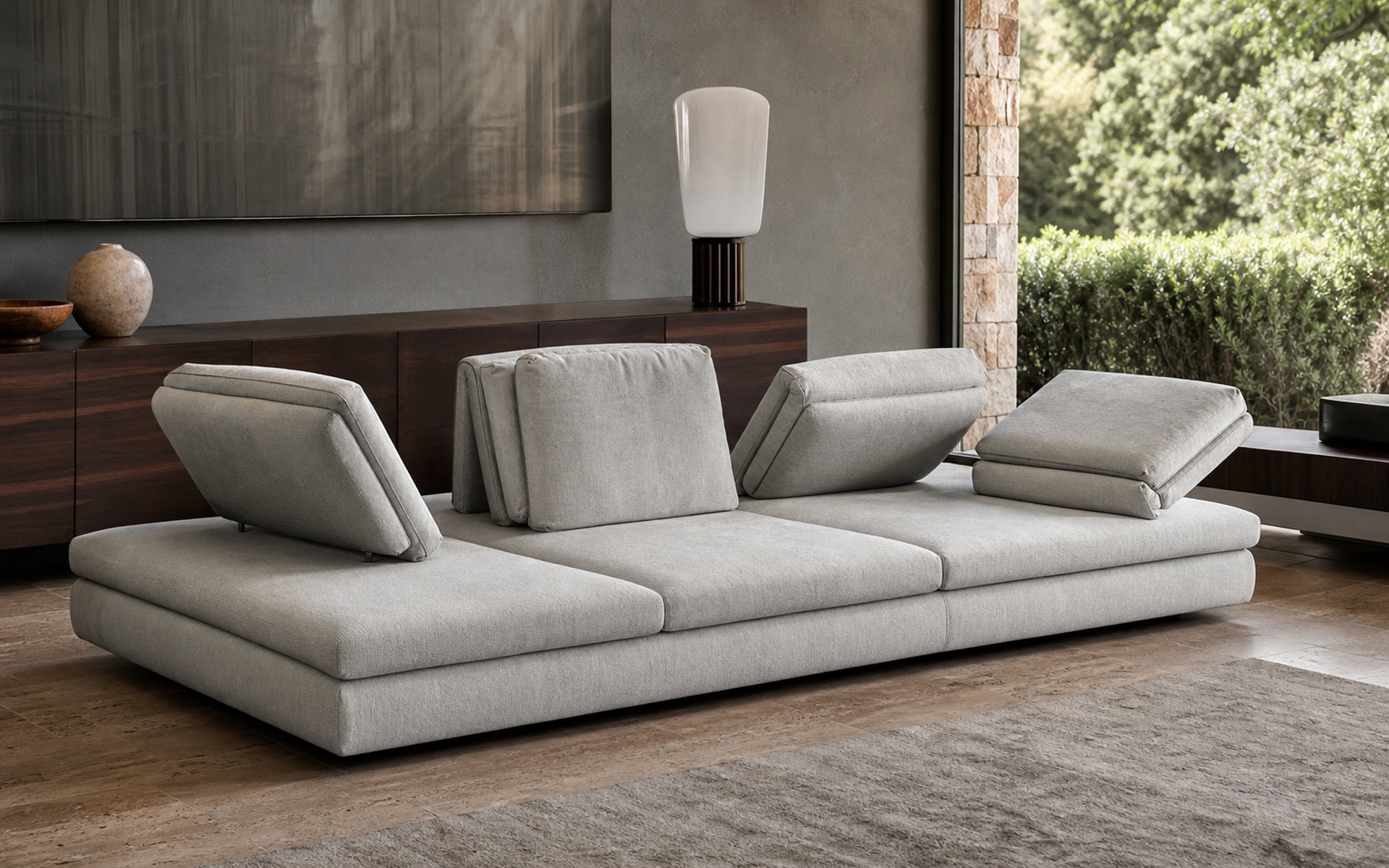
Francesco Binfaré spent decades asking what sofas know about the people on them. His answer for Edra was a sofa with cushions you fold like opinions: the back goes wherever you decide comfort lives today.
Most sofas answer the question “where is the back?” once, in the factory, forever. The Edra Standard answers it every evening, differently.
Francesco Binfaré is one of the last living links to the heroic age of Italian design. Through the 1960s and 1970s he ran the research centre at Cassina, midwifing other people’s radical furniture into production, working alongside the generation that unbolted, deflated and reinvented the sofa. He only began signing designs himself in the 1990s, for the Tuscan house Edra, arriving as a designer in his fifties with thirty years of other people’s experiments already digested. The Standard, launched by Edra in 2011, is that digestion made furniture. At rest it looks almost defiantly ordinary, as its name admits: a deep, generous, rectilinear sofa, plain-faced, hiding its intelligence. The intelligence is in the cushions. Each back cushion contains a jointed internal frame, Edra’s “smart cushion,” that folds and holds its position: raise it and you have a formal high back, drop it flat and the sofa becomes a daybed, fold it midway for reading, tip it outward to make an armrest or turn the sofa’s face to the other side of the room. No mechanism shows, no lever exists. You simply move the cushion the way you would adjust a pillow, and it stays.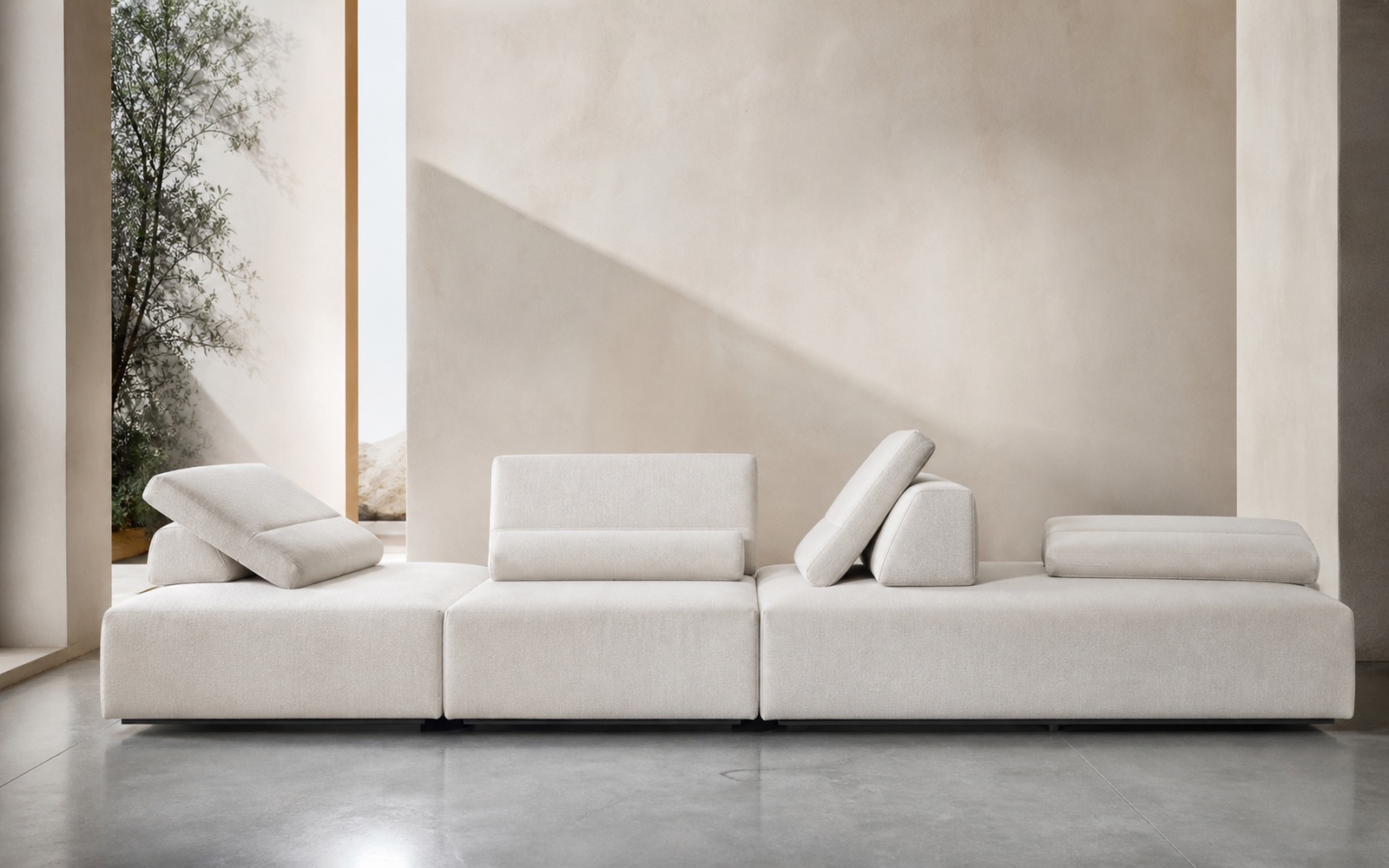
The sofa that learned from forty years of arguments
Put the Standard at the end of the story this archive has been telling and it reads like a settlement. The modernists of 1928 fixed the body at chosen angles and called it equipment. The radicals of the 1970s threw the frame away and let the body slump where it liked. And in between, Cassina’s own Maralunga, from the very research centre Binfaré ran, gave the sofa its first movable posture with that famous folding backrest. The Standard is the Maralunga’s idea grown up and set loose: not one adjustable position but a continuously negotiable landscape, comfort as a verb. Binfaré talks about sofas as territories for life, for talk, work, love and boredom, and the Standard is that talk made buildable.“Comfort as a verb: the back goes wherever you decide it lives today.”
How to see it
The honest knock
Concessions first. The Standard is expensive in the way engineered invisibility always is; you are paying for a mechanism you will never see and cannot show guests. Its plain face means it photographs as a very ordinary sofa, and buyers chasing a visual statement will be tempted elsewhere. The smart cushions are heavy compared to dumb ones, the deep seat needs a large room to breathe, and the design’s genius is behavioural rather than sculptural, which means it must be lived with, not glanced at, to be understood. In a showroom walk-past, the cleverest sofa of its generation loses to a prettier dumb one every time.Copies, and the tell
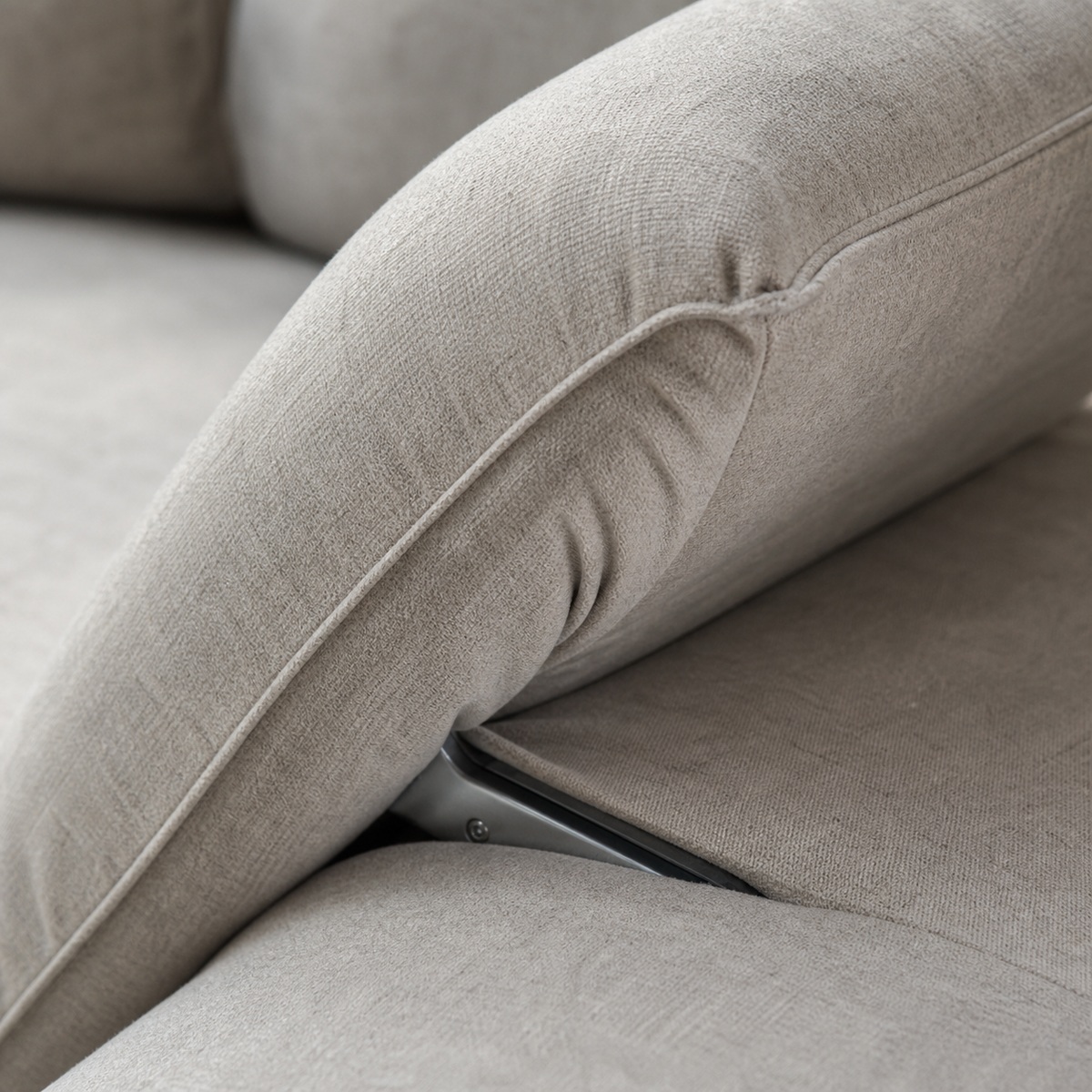
Copies of the Standard fail instantly at the hinge, because the hinge is the product. Knock-offs bolt ratchet mechanisms from recliner catalogues into the cushions: they click through fixed positions, refuse the in-between angles, and their movement feels like machinery where the original feels like firm dough. Held at half fold, fake seams gape and upholstery bunches. And the fold-out trick, cushions becoming arms or reversing the sofa’s orientation, is usually missing entirely, leaving an ordinary deep sofa wearing a clever sofa’s name. The original is a piece of behavioural engineering. The copy is a sofa with a hidden disappointment. Binfaré’s long career began by helping the twentieth century’s radicals get built. His own masterpiece argues their debate is over: the body does not need to be fixed or freed. It needs to be asked, nightly, and the furniture should take notes.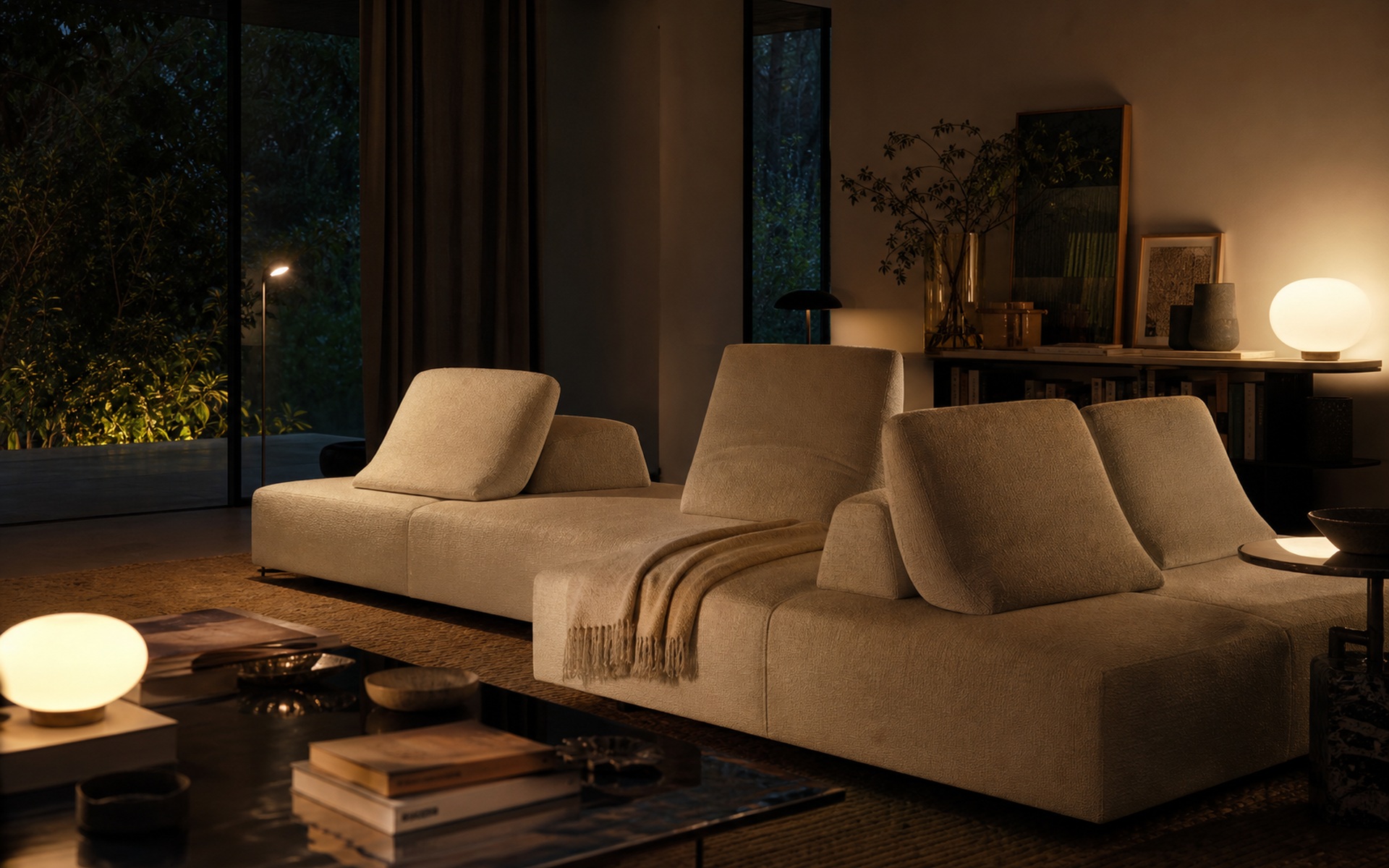
Sources and confidence
- Standard sofa, Francesco Binfaré, Edra, adjustable “smart cushion” system. Verified. edra.com
- Launch year 2011. Probable; consistently cited in Edra materials and design press. edra.com
- Binfaré’s earlier career directing research at Cassina. Verified against design literature and Edra’s own designer biography. edra.com

